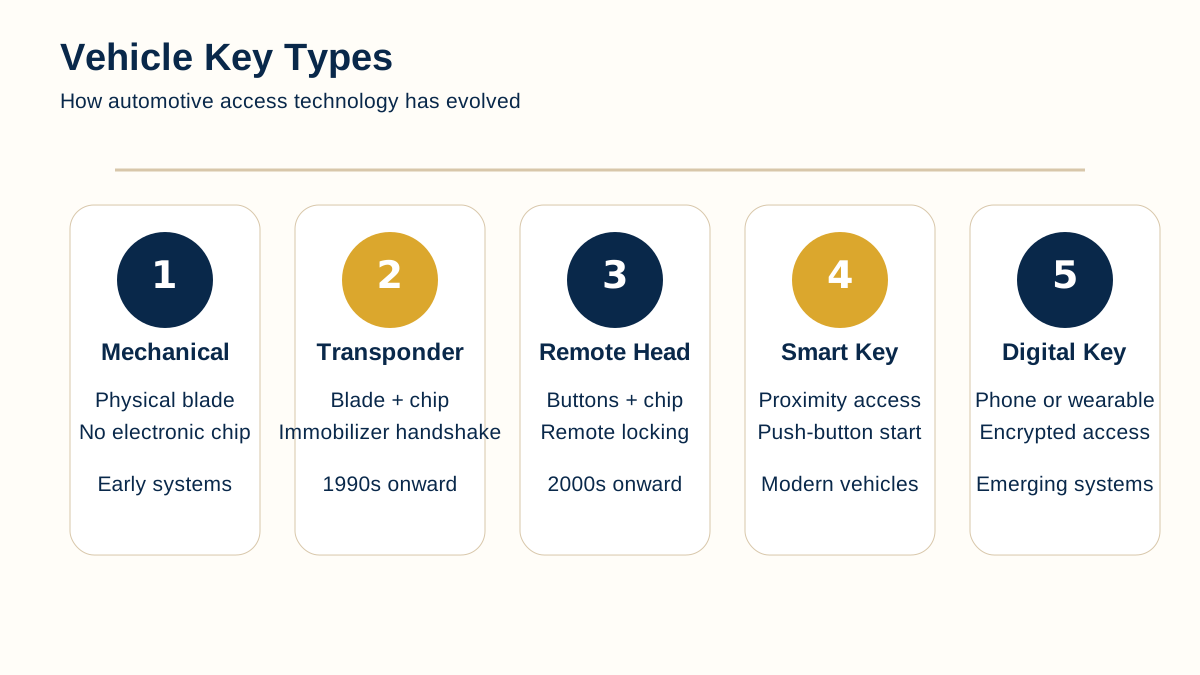
Compare common vehicle key types, from mechanical and transponder keys to remote-head, proximity, smart, and digital-key systems, including how they differ and what drivers should know.
Educational visual created for AutoLocksmith.LLC. Vehicle systems vary by manufacturer, model, year, and equipment.
Overview
Vehicle keys have evolved from simple cut metal blades into layered electronic security devices. The word “key” can now describe a traditional mechanical key, a transponder key with an embedded identity chip, a remote-head key, a proximity smart key, or even a digital credential stored on a supported phone. These categories overlap, and manufacturers use different names, so the most useful approach is to understand what each type actually does.
Traditional mechanical keys
A mechanical key relies primarily on the physical shape of the blade to operate the lock cylinder or ignition. Older vehicles may use this alone, while newer vehicles can still include a mechanical emergency blade as a backup inside a fob.
Precision matters because an inaccurately cut blade can bind, wear the lock, or fail to turn. A copied key made from a worn original can reproduce existing wear, which is one reason code-based or properly referenced cutting can be preferable when available.
Transponder keys
A transponder key adds electronic authorization to the mechanical blade. The blade may turn the ignition, but the vehicle generally expects a recognized electronic identity before allowing normal starting. This layered design helps prevent a simple copied metal blade from functioning as a complete starting key.
A transponder-key replacement may therefore involve two separate tasks: cutting the blade and programming or registering the electronic component.
Remote-head keys
A remote-head key combines a physical key blade with lock/unlock buttons in the same housing. The remote-control function and the immobilizer identity function may be related but are not necessarily the same component or programming step.
A driver can sometimes experience a remote problem while the vehicle still starts, or a starting-authorization problem while the remote buttons still operate. That distinction helps diagnosis.
Flip keys and folding keys
Flip keys package the blade into a spring-loaded or folding housing. Functionally they may be mechanical, transponder-equipped, remote-equipped, or all three. The folding mechanism is primarily a physical design feature rather than a separate security category.
Wear in the hinge, pivot, or blade can create mechanical problems even when the electronics remain healthy.
Proximity and smart keys
A proximity or smart key is designed to be recognized without inserting a conventional key into the ignition. Depending on the vehicle, the key may support passive entry, push-button start, remote functions, and an emergency mechanical blade.
Because these systems depend on two-way communication and vehicle-side antennas or modules, a “key not detected” message can originate from the fob, its battery, the vehicle, interference, or system conditions.
Digital keys and phone-based credentials
Some newer vehicles support digital-key functions using approved mobile devices or other secure credentials. These systems vary widely by manufacturer and should not be assumed interchangeable. Phone compatibility, vehicle configuration, account access, and manufacturer authorization can all matter.
Digital-key support does not necessarily eliminate the need for a physical or electronic backup key.
Why two similar-looking keys may not be compatible
Appearance is one of the least reliable ways to identify a modern vehicle key. Similar housings can contain different electronics, frequencies, button configurations, transponder technologies, or vehicle-specific identifiers.
Compatibility should be based on reliable vehicle and key information rather than shell appearance alone.
Choosing the correct replacement path
Start with the vehicle year, make, model, trim, and current key type. Determine whether at least one working key remains, whether an emergency blade is needed, and whether the problem involves only remote buttons or full starting authorization.
A correct replacement should be physically compatible, electronically compatible, properly programmed when required, and tested for every intended function.
How to identify the type you actually have
Start with the way the vehicle is normally unlocked and started. A blade inserted into the ignition suggests a mechanical or transponder-based key. A blade with remote buttons may be a remote-head key. A key that stays in a pocket while the driver touches the door handle and presses a start button is generally part of a proximity or smart-key system. Some vehicles combine several of these features in one device.
The owner’s manual, original key markings, and reliable vehicle application information can help confirm the category. The purpose of identifying the type is not to memorize terminology, but to understand which physical and electronic functions a replacement must support.
Why the distinction matters during replacement
The service process changes with the key type. A traditional key may primarily require accurate cutting. A transponder key adds electronic authorization. A remote-head key may need remote functions and immobilizer identity addressed separately. A smart key can add passive-entry and proximity requirements, while a digital key may depend on manufacturer accounts and supported devices.
Because of those differences, a low-cost key that appears to fit can become expensive if it lacks the correct electronics or cannot be registered to the vehicle. Identifying the system before ordering parts is one of the simplest ways to avoid wasted time.
Key takeaways
Modern vehicle keys can combine mechanical, radio, and immobilizer functions.
Key type is determined by function and electronics, not just appearance.
Remote operation and starting authorization can fail separately.
Compatibility should be verified before purchasing or programming a replacement.
Continue learning
Use these related AutoLocksmith.LLC resources to continue from the visual into broader driver education and technical background.
Professional automotive key help when you need it.
AutoLocksmith.LLC provides education and referral guidance. For supported mobile automotive key and vehicle-security services, contact Wood's Automotive Locksmith.
When you call, mention that you found the service through KEYRING to receive $10.00 off your bill