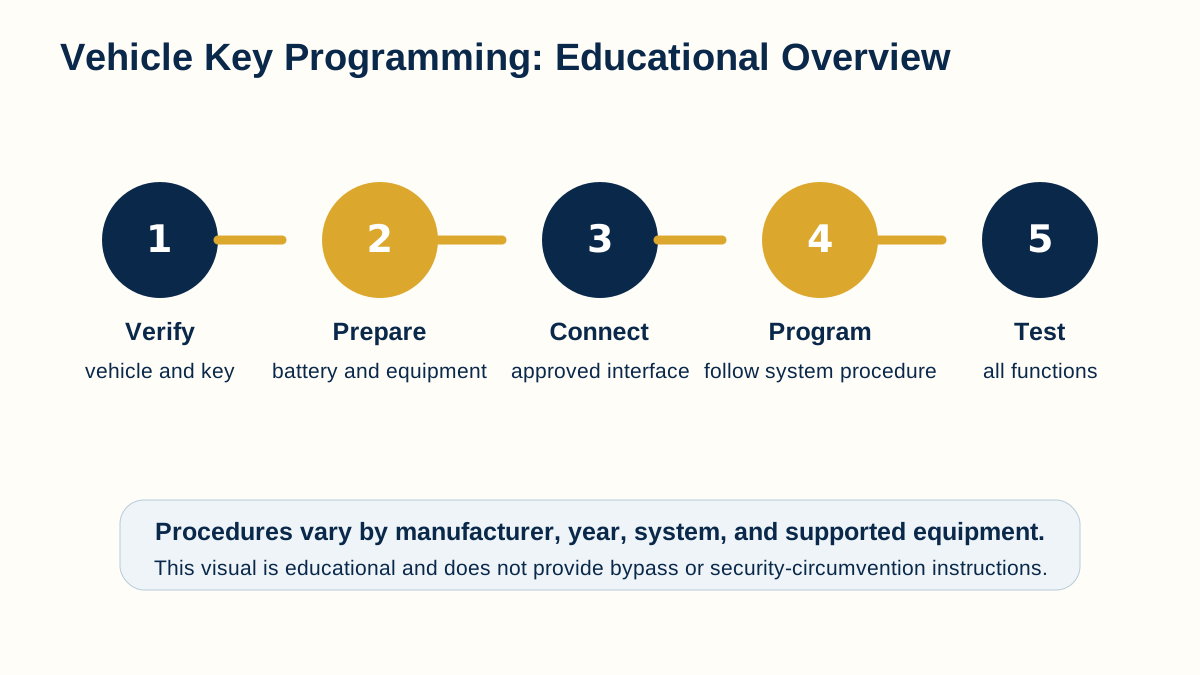
Learn the high-level vehicle key programming process, from compatibility and ownership verification through key preparation, authorized programming, synchronization, and final testing.
Educational visual created for AutoLocksmith.LLC. Vehicle systems vary by manufacturer, model, year, and equipment.
Overview
Vehicle key programming is the process of making a compatible electronic key or fob recognized by a specific vehicle. The exact steps differ by manufacturer, model, year, key type, and security architecture, so there is no single universal programming procedure. A useful overview focuses on the stages that must be completed safely: confirm the vehicle and key, verify authorization, prepare the key, use the supported programming method, and test every intended function.
Step 1: identify the vehicle and key system
Accurate vehicle information comes first. Year, make, model, trim, and sometimes the vehicle identification number help determine which key family and programming method may apply.
The existing key style also matters. Mechanical, transponder, remote-head, proximity, and smart keys can require different preparation and programming.
Step 2: verify compatibility
A replacement key must be compatible before programming begins. Similar cases and button layouts can hide different frequencies, electronic identifiers, chip technologies, or supported applications.
Using an incompatible key wastes time and can create misleading symptoms. Reliable part identification is more important than visual similarity.
Step 3: verify ownership or authorization
Automotive keys are part of a vehicle security system. Legitimate service should include appropriate proof of ownership or authorization before new credentials are created or registered.
This protects vehicle owners and helps ensure that programming activity is performed for an authorized person.
Step 4: prepare the physical key when required
Keys that include a mechanical blade may need to be cut correctly before the job is complete. Some smart keys include an emergency blade even though normal starting is electronic.
Physical key cutting and electronic programming are separate tasks. A key can be electronically recognized yet still have an incorrectly cut blade, or the reverse.
Step 5: use the supported programming method
Depending on the vehicle, programming may involve approved diagnostic equipment, manufacturer procedures, security authorization, or other supported methods. The details are intentionally vehicle-specific.
A high-level educational overview should not be confused with a bypass guide. The goal is to register legitimate credentials without weakening the security system.
Step 6: synchronize related functions
Some replacement keys require more than one function to be confirmed. Immobilizer identity, remote buttons, passive-entry features, and other supported functions may not all be handled identically.
A key that starts the vehicle but does not operate the remote correctly may still need additional diagnosis or setup.
Step 7: test every key and function
Final testing should include the newly programmed key and any existing keys that are expected to remain active. Check starting authorization, lock/unlock operation, passive entry where equipped, emergency-key operation, and other supported features.
Testing helps catch incomplete programming, an incompatible replacement, a weak battery, or an unrelated vehicle-side problem.
Common reasons programming does not solve the problem
An incorrect replacement key, damaged electronics, a weak vehicle battery, faulty antennas or modules, or pre-existing vehicle problems can all prevent successful operation even when the programming process itself is performed correctly.
The programming step is only one part of a complete key-service workflow.
Planning the appointment efficiently
Before a programming appointment, gather the vehicle year, make, model, trim, identification number when available, and every key that should remain active. Explain whether the goal is to add a spare, replace a damaged key, or recover from an all-keys-lost situation. Bringing the keys that are expected to continue working is important because some procedures can affect which credentials remain registered. Clear preparation also gives the service provider an opportunity to verify the replacement hardware before time is spent attempting programming.
Adding a spare key versus an all-keys-lost situation
Programming requirements can change depending on whether a working authorized key is still available. Adding a spare often starts from a known-good credential and allows the existing key to be tested before and after service. When every key is lost, identification, ownership verification, key preparation, and vehicle-specific authorization can become more important because there is no working key for comparison.
Drivers should therefore tell the service provider whether at least one working key remains. That detail affects planning, parts selection, and the amount of verification or diagnostic work that may be needed.
What a successful result should look like
A successful programming job is more than a tool reporting completion. The new key should perform the functions appropriate to that vehicle and key type, and keys intended to remain active should be checked as well. Mechanical blades should operate the locks they are meant to operate, remote buttons should be tested, and smart-key or proximity functions should be confirmed where equipped.
If one function still fails, the remaining issue may involve the replacement hardware, a separate setup step, a weak battery, or the vehicle itself. Final functional testing is what separates a complete service from an incomplete programming attempt.
Key takeaways
Programming begins with correct identification and compatibility.
Ownership verification is part of responsible key service.
Mechanical cutting and electronic authorization are separate tasks.
A job is not complete until all intended functions are tested.
Continue learning
Use these related AutoLocksmith.LLC resources to continue from the visual into broader driver education and technical background.
Professional automotive key help when you need it.
AutoLocksmith.LLC provides education and referral guidance. For supported mobile automotive key and vehicle-security services, contact Wood's Automotive Locksmith.
When you call, mention that you found the service through KEYRING to receive $10.00 off your bill