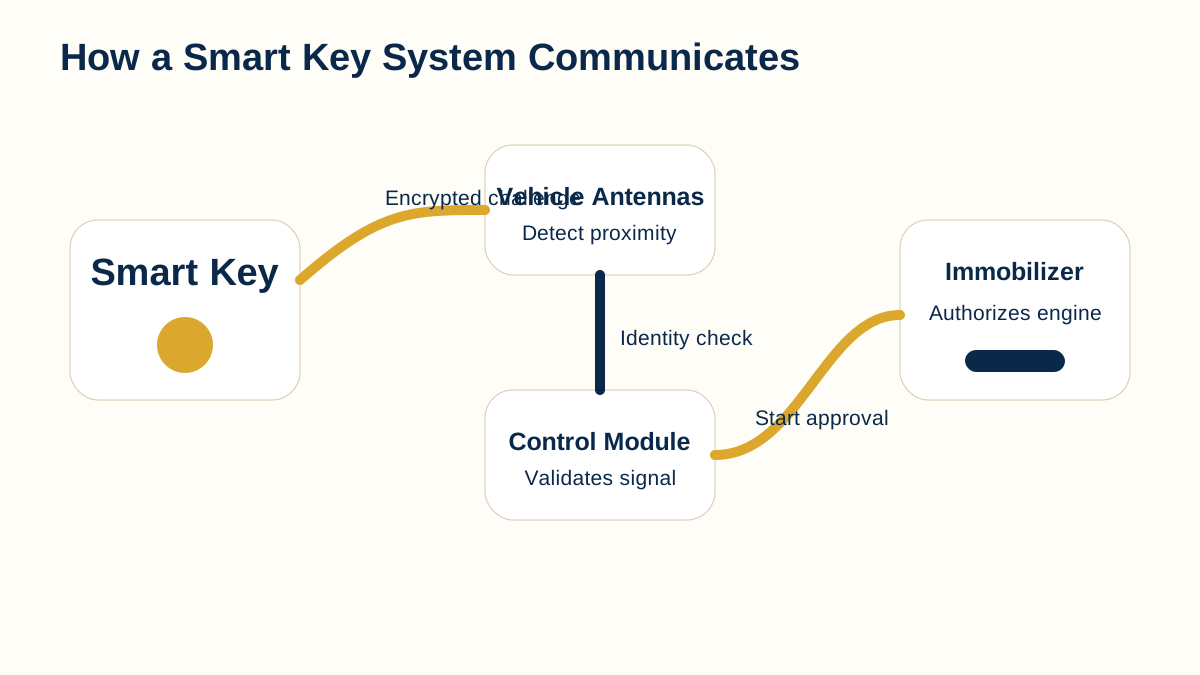
Understand the major parts of a modern smart-key system, including proximity detection, vehicle antennas, authentication, immobilizer authorization, and push-button start.
Educational visual created for AutoLocksmith.LLC. Vehicle systems vary by manufacturer, model, year, and equipment.
Overview
A smart-key system is best understood as a conversation between the key and several vehicle components rather than as a single remote control. The vehicle has to detect the key, exchange information, decide whether the key is authorized, and then permit a requested function such as unlocking or starting. The exact implementation varies widely, but the broad sequence is useful for understanding common symptoms and why a smart-key problem can involve more than the fob itself.
The smart key itself
The smart key contains electronics that can respond to vehicle requests and often also provides conventional remote buttons. It may include an emergency mechanical key for door access if electronic entry is unavailable.
Battery condition is important for normal proximity operation, but many systems also provide a backup recognition method for a weak or depleted fob battery.
Exterior and interior antennas
Vehicles commonly use antennas or detection points to determine whether an authorized key is near a door, outside the vehicle, or inside the passenger compartment. These detection zones help the system decide whether to unlock, allow starting, or prevent the key from being locked inside.
A problem in one detection area can produce symptoms that look like a bad key even when another area still works.
Requesting access
Touching a door handle, pressing a handle switch, or approaching the vehicle may initiate a request depending on the design. The vehicle then looks for a valid key in the appropriate area.
If the key is not detected, the cause can include distance, obstruction, interference, battery condition, key damage, or vehicle-side faults.
Authentication and authorization
Detection alone is not enough. The system needs to determine that the responding key is one of the vehicle’s authorized credentials. That security decision is part of what separates a modern smart key from a simple radio remote.
The details are manufacturer-specific and intentionally protected. For drivers, the important point is that a key can transmit yet still fail authorization if it is incompatible, unprogrammed, damaged, or no longer registered to the vehicle.
Push-button start
When the driver requests a start, the vehicle typically checks for an authorized key in the correct interior zone and verifies other operating conditions before permitting starting. Brake or clutch input, transmission position, vehicle battery condition, and security status can all affect the outcome.
A no-start condition with a smart key therefore does not automatically mean the fob needs replacement.
Backup detection
Many vehicles provide a backup method that allows the key to be placed against or near a designated detection point when the fob battery is weak. The location and procedure vary, so the owner’s manual is the appropriate vehicle-specific reference.
This backup capability is useful for separating a weak fob battery from a completely incompatible or damaged key.
Common smart-key symptoms
Drivers may see “key not detected,” intermittent passive entry, reduced range, a door that responds differently from the others, or a vehicle that recognizes the key only at the backup point. Each symptom provides clues but does not by itself identify the failed component.
Testing with a known-good spare key, checking the fob battery, and observing whether the problem affects one function or every function can help narrow the possibilities.
Replacement and programming considerations
A replacement smart key must match the supported vehicle system and generally must be registered or programmed before it can serve as an authorized key. An emergency blade may also need to be cut.
A complete service should verify lock/unlock functions, passive entry where equipped, starting authorization, emergency-key operation, and any supported remote features.
Understanding a system instead of blaming one part
The smart-key diagram is most valuable when it is used as a system map. The fob, vehicle antennas, body electronics, immobilizer functions, starting controls, and vehicle battery all participate in the experience the driver sees as “the key.” A fault in any one of those areas can change how the system behaves.
That system view explains why replacing a fob is not always the first or correct answer. If both authorized keys fail near the same door but work elsewhere, the pattern may point toward the vehicle. If only one key has reduced range, the fob or its battery becomes more likely. If the entire vehicle has weak electrical behavior, the vehicle power supply deserves attention.
Useful observations before diagnosis
Record whether passive entry works at every door, whether the remote buttons work from normal distance, whether the vehicle starts normally, and whether backup recognition changes the result. Note any recent battery replacement, water exposure, collision repair, or electrical work that preceded the symptom.
These observations do not replace testing, but they help separate proximity, remote-control, authorization, and vehicle-power issues. That distinction makes diagnosis more efficient and reduces the temptation to replace parts based on a single warning message.
Key takeaways
Smart-key operation depends on both the fob and multiple vehicle components.
Detection, authentication, and authorization are separate stages.
A weak fob battery can mimic more serious problems.
Vehicle-specific backup procedures should come from the owner’s manual or reliable service information.
Continue learning
Use these related AutoLocksmith.LLC resources to continue from the visual into broader driver education and technical background.
Professional automotive key help when you need it.
AutoLocksmith.LLC provides education and referral guidance. For supported mobile automotive key and vehicle-security services, contact Wood's Automotive Locksmith.
When you call, mention that you found the service through KEYRING to receive $10.00 off your bill