
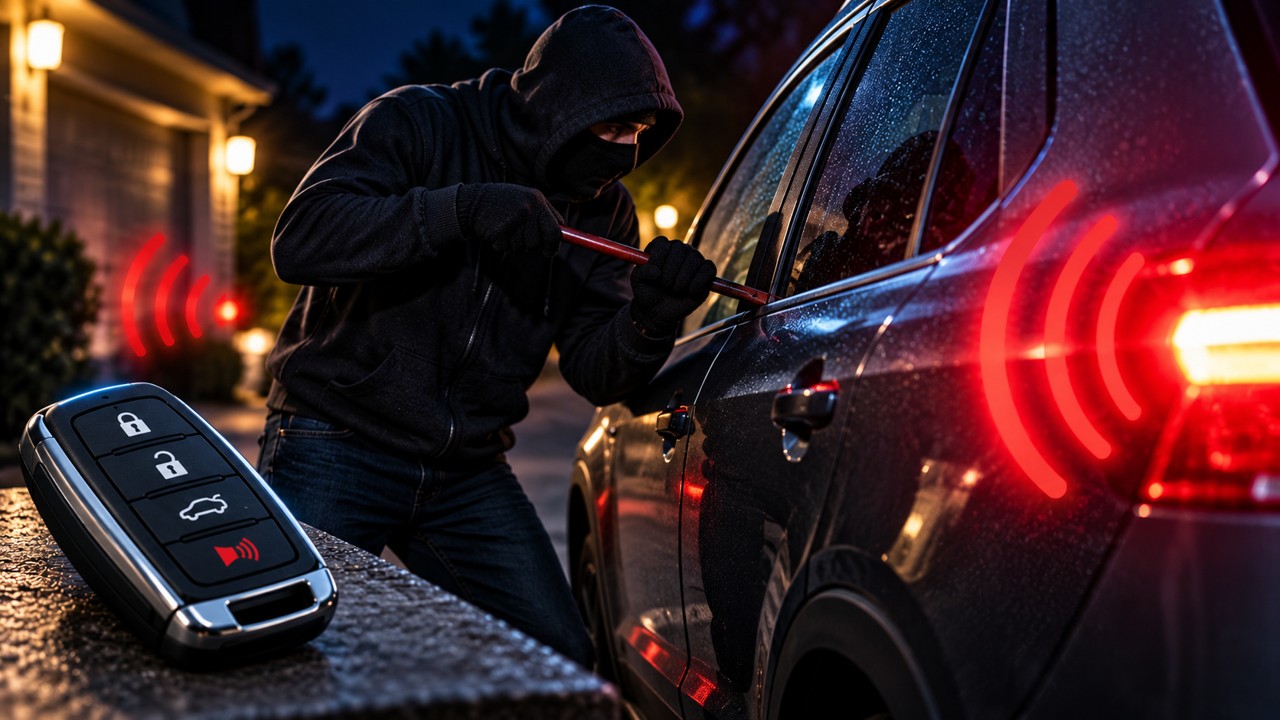
Practical habits for protecting keyless-entry vehicles and reducing avoidable exposure to theft techniques. This guide is educational and is intended to help drivers understand the terminology, decisions, and information involved before contacting a qualified automotive locksmith or other appropriate service provider.
Store keys thoughtfully
Modern automotive keys combine mechanical and electronic functions in different ways. The exact service depends on the vehicle year, make, model, trim, ignition type, and the key or fob already associated with the vehicle. That is why visual similarity alone is not enough to establish compatibility.
Use physical security as another layer
A professional normally starts by identifying the vehicle and key system, then determines whether the job involves cutting, remote pairing, immobilizer programming, smart-key registration, diagnosis, or a combination of those steps. Procedures can differ even between model years of the same vehicle.
Keep software and recalls in mind
Drivers can make the process easier by gathering the year, make, model, VIN when appropriate, the number of working keys, and any identifiers printed on the existing fob. Proof of ownership or authorization should also be available before key origination or security-related work.
Respond quickly to missing keys
Avoid forcing locks, ignition components, or key shells when something does not operate normally. Excessive force can turn a key problem into a damaged lock, ignition, or electronic component. If basic checks do not solve the problem, vehicle-specific diagnosis is the safer next step.
Before you call
- Have the vehicle year, make, and model ready.
- Know whether any working key, remote, or smart fob remains.
- Have proof of ownership or authorization available.
- Describe exactly what the key does and does not do.
Wood's Automotive Locksmith serves supported vehicles in Northern Pennsylvania and the Southern Tier of New York.
Call 607-731-8382